®
® 


 ®
® 






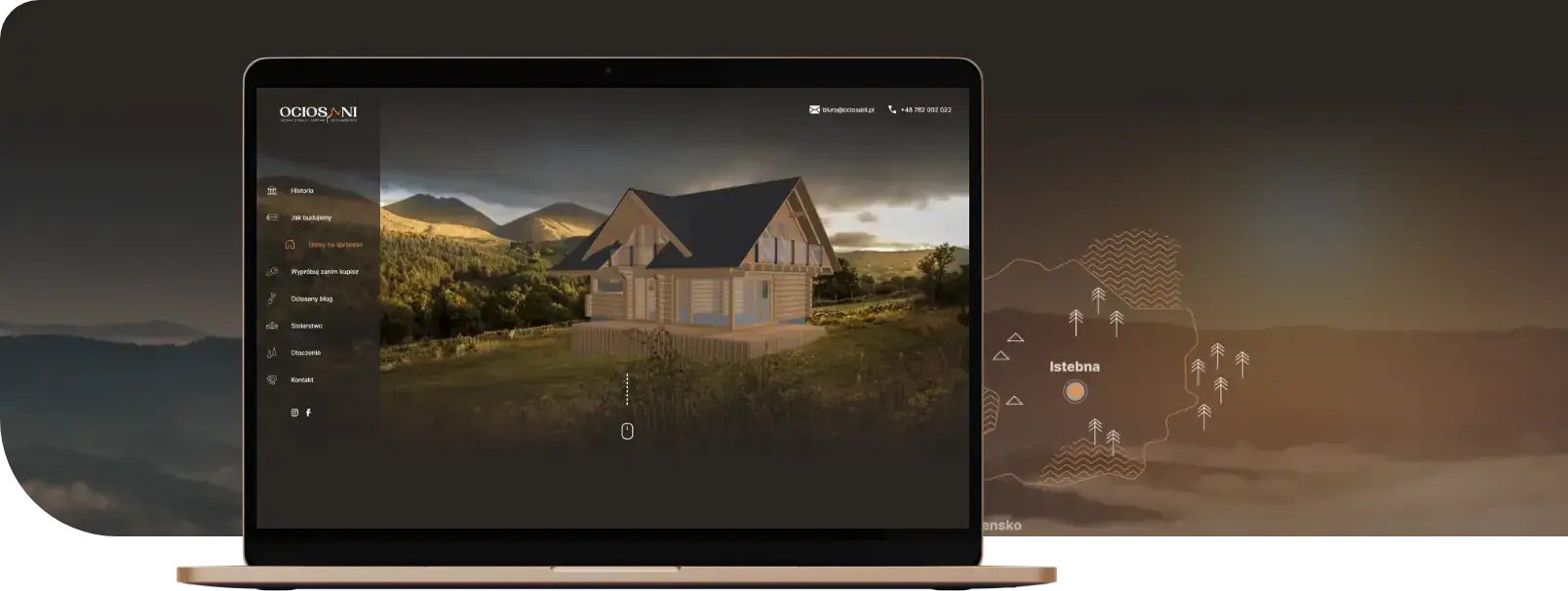
2023 is a great time to build a new, responsive, and modern website. Your own website is a way to build a community, brand position, and communicate to the world about the services you offer. There are many websites online that need improvement or don’t fulfill their basic purpose – they don’t bring in customers, don’t generate bookings, and don’t create leads for businesses. In the guide below, we’ll present the essential steps to make your own website not just a business card, but also an effective marketing tool for your company.
Enjoy the read!
Does your business need a website?
The last few years have been tough. They forced entrepreneurs to change the way they think about business. For many companies, it was a significant test of how well the brand performs online, how prepared it is for digitization, and how it identifies itself across all internet platforms. This was caused by the need to organize remote work, minimize in-person meetings, and use the internet as the main way to communicate with the world. And the first point of contact between a brand and the world online is precisely your own website. It’s the place where people learn about the quality of services offered, about the company’s offerings, and its identity. Your own website is also the place where bookings are generated, leads are acquired, and business contacts are made. Knowing the importance of comprehensive brand identification online, it seems absolutely necessary to ensure that your own website catches the eye, delivers a complete set of information, and encourages people to get in touch with the brand.
The recipe for success
But how do you achieve this? How do you make your own website more than just an average business card? So that it stands out from the competition? So that visitors have no doubt that this is the company they want to work with?
More on that below… (we encourage you to read to the end – the last point is the key one). Warning! If you’re not interested in having a professional website, creating a brand that sells, or stabilizing your sales funnel – this article is not for you. Here we explain how your own website, supplemented with excellently managed marketing, will help your business spread its wings in 2023 and gain a powerful new tool for acquiring potential customers.
Knowing the importance of comprehensive brand identification online, it seems absolutely necessary to ensure that your own website catches the eye, delivers a complete set of information, and encourages people to get in touch with the brand.
Your own website is the key to a powerful brand online
Congratulations! Since you’re here and still reading, you’re sure that it’s time for a change. Time for your company’s own website to start delivering benefits and building your brand’s reach. You’re just a few basic steps away from success. I’ll try in the following sections to list them and explain why it’s so important to build a professional brand image from the ground up! But before we move on, I encourage you to subscribe to our newsletter – from now on, every Sunday at 2 PM on this blog and our social media channels, YouTube channel, and podcasts, we’ll be serving a solid portion of knowledge to help everyone learn about brand building methods, growing online presence, and establishing expert positioning! Our latest e-Book on building corporate social media will be coming out soon! So stay with us!
Step 1. Choose a domain name.
So let’s start with the most important thing – the domain name. This is the address that users type into the browser to display your own website. In our case, it’s specodit.pl – our company name without spaces. We also have several additional addresses like specod.it, strony.bielsko.pl, or marketing.bielsko.pl. Each one leads here – to our website. A domain name can help build brand recognition from the very first days of a brand’s existence. Lesser-known companies can bring their audience closer by using the domain name to present their description in the simplest terms. A good example is two of our recent clients:
Just by reading the website address, everyone knows what each of these companies does. They also know where they’re located and can easily remember how to find these brands again in the future. A good domain name also makes it easier to rank in organic search results and on Google Business Profile. After all, that’s exactly what users type into the search engine when looking for a company of a given type – “car buying bielsko”. With a bit of work and configuration, the Google search engine will quickly learn and understand that for such a phrase, it should display Google Business Profile of our company and its website. This will help reduce advertising costs and bring the company closer to recognition in the local market. It’s worth taking a moment to properly choose a domain name for your business in a way that effectively helps build the brand’s presence and recognition.
Step 2. Hosting – the right server for your website
Whether it’s your own website in the form of a business card or a large web application – every website needs a server. The right machine allows you to reduce page loading time, protect against attacks, and also improve marketing and SEO results. Remember that loading time is one of the fundamental factors affecting website evaluation. Even the best optimization work and improvements to the site’s code won’t fix problems caused by a weak machine. Proper hosting is essential!
Step 3. Sitemap – technical content layout of your own website
To get started, you’ll need to set up your website’s structure. Professional websites are based on a well-thought-out and refined vision of technical layout. Your own website is much more than a collection of texts and photos. It’s a project based on competitive analysis, subpage layout and content, and a plan that allows the visitor to understand the brand and make purchasing decisions in an uninterrupted and smooth manner. One of the key elements of such a plan is the sitemap. It’s a layout of subpages – even sketched on a piece of paper – that allows you to plan the visitor’s journey through the site. It’s worth sketching out all the subpages and developing a plan that allows for a smooth and specific presentation of all elements the visitor needs to find answers to the questions they came with. If you run a service-sector business, it’s very important to: start with presenting the company, showcase and describe the services offered, display a portfolio, testimonials from satisfied clients, a section with frequently asked questions, and finally show selected ways to get in touch. This division ensures that visitors arriving at the site can be confident they received the necessary complete set of information and can make an informed decision about wanting to collaborate. The sitemap example will look different for stores, informational sites, portals, and business card websites. There’s no perfect recipe for a site plan. It should always be properly tailored to the specifics of the industry and the persona that visits the site. Make sure your own website doesn’t cause confusion but instead clearly guides visitors through the content offered.
Step 4. Custom graphic design
Achieving the above-mentioned goal is only possible after properly designing the visual layer of the website. Once you have the technical content layout of the site, you need to develop a custom graphic design. Custom. That’s the keyword. We advise against using any templates, ready-made designs, or other pre-built solutions found online. This is the biggest possible mistake that from the very start prevents the site from properly reaching its audience. Why? Pre-made templates contain many bugs. The amount of code contained within causes them to load very slowly, and the optimization possibilities of such a creation are limited. Ready-made templates are also universal. They try to fit everyone and every occasion. Unfortunately, there’s nothing worse. Every industry is different, work specifics vary, the model customer is different. And consequently, it’s impossible to develop a template that would meet the expectations of every potential visitor. A poorly designed website discourages visitors and causes confusion. A website, its colors, iconography, and graphics should resonate with the audience in a way that’s consistent with the specific industry, company, and subject matter.
Step 5. Proper content for your own website
Now that you know how important it is to properly adapt the design and content layout of the site, you should also remember about its quality. In every sector of websites, content matters. It’s through content that we convey all necessary information to the user. Even the best graphic design in the world, if not supported by appropriate content, won’t deliver the expected results. The visitor should receive a complete set of information in a clear and readable way. Every sentence should convey knowledge, quality content, and the substantive purpose of the opened subpage. Every section of the portal has its clear and defined purpose. For example:
When a user selects the “Services” section from the navigation menu, they expect that upon entering they’ll receive a few sentences describing what the company does. They’ll scan the text on the subpage looking for the service they need. A good practice is to write website texts that speak to the audience and divide the content into purely sales-oriented parts and informative ones. Each type of content can use a different delivery style, tone, and completely different sentence construction. Offer content should be factual and specific, the company description should be moving and detailed, and the sales subpage should be informative and persuasive.
Step 6. Responsiveness – adapting to mobile devices
There’s no bigger mistake on a website than forgetting about mobile devices. Research shows that 85% of web traffic occurs on mobile devices. They represent the future of the internet, and the graphic design of most sites should be centered around them (some industries deviate from this rule). A website should be responsive. What does that mean? Simply that as the screen width changes, content should behave differently in a more user-friendly way. With the popularization of mobile devices, clickable phone links have gained importance. The significance of adjusting font sizes for devices, changing element layouts, and adapting image sizes has also increased. It’s hard to deny that the need to zoom, switch, and adjust the view on a phone discourages users, who instead of struggling, would much rather leave the site and find another one where content is delivered in a convenient and pleasant way.
Step 7. Landing pages – marketing subpages
As your business and marketing efforts grow, it’s also worth asking yourself what a user receives when they land on your site from an advertising campaign. After all, your own website is not just a place to showcase the brand’s offering. In many cases, it also has sales significance. For this reason, we recommend creating properly refined and designed landing pages. These are additional subpages of the portal whose purpose is to reach the visitor and deliver all information aimed at maintaining their focus and conveying all necessary marketing information on a single subpage. The most universal landing page design includes several basic elements: offer presentation, example use cases, product testimonials, applications, and encouraging contact or purchase. It’s the content of this subpage that has key significance in the conversion process (more about conversions in our post about marketing activities).
Step 8. Contact form – connect with your audience
Contact forms are a great way to collect information from visitors and get feedback. They are also useful for marketing purposes, such as collecting email addresses so you can send newsletters or updates about the company. Contact forms can be used not only for these purposes but in many different ways.
When it comes to using a contact form on your website, there are two main reasons: collecting information from users and getting feedback from them. In both cases, the goal is typically (1) getting the visitor’s name and email address so they can receive future emails from you, or (2) asking them questions about themselves so they feel more connected to the brand/business behind the website/site content. Users very often prefer email contact and leaving their contact details over calling the company. By using contact forms, there’s an opportunity to generate leads, answer users’ questions, and follow up with visitors during business hours (very often direct contact with the brand is not possible at a given moment).
Your own website in 2023
In 2023, you can be the owner of your own website. It’s not as difficult as it might seem, and it’s certainly not expensive. Here are the basic steps:
- Plan your website carefully. It’s not a race. Proper planning of the site structure, selecting the right number of subpages, and custom graphic design will allow you to build a professional marketing tool for your website.
- Choose the right implementation technology. A fast website hosted on a professional server will help improve marketing efforts and accelerate SEO results. Loading speed is the first factor that matters. You have only two seconds to capture the visitor’s attention!
- Adapt your site for mobile devices – over 85% of web traffic relies on mobile devices. It’s on their phones that users learn about the brand, form their first impression, and decide whether to take interest in the company. A well-designed mobile site will allow you to leverage the full potential of the internet!
- Build a complete image. Recent years show that your own website is just the beginning of the journey. The next step is a consistent and complete way to identify your brand. It should be based on social media, SEO, expert channels, advertising, and image – consistent and distinctive!
A complementary online image
I hope this guide has helped you understand the website building process and how to do it yourself. It’s not as hard as it might seem, and once you have your site, there are many ways to improve it over time to make sure it stays relevant in today’s fast-changing world. However, if you need help creating your brand identity online or want your own website to be created by professionals, we encourage you to get in touch. We’d be happy to help build a website that sells!