®
® 


 ®
® 





How Do They Work and What Are Their Characteristics?
One of the most popular forms of advertising on the Google network is responsive display ads. These are advertising banners found on many websites like Onet, Interia, Otomoto, WP, as well as YouTube, Gmail, etc. They can adjust their appearance, format, and size to virtually any space, and their primary task is to use visual communication to inform online users about offers, brands, and advertised products. In this post, I’d like to introduce the concept of responsive display ads and explain how they work and how to optimize them. Enjoy the read!
The advertising network (Google Display Network) is a collection of over 2 million websites where owners provide advertising space for placing graphic content. The Google Ads advertising tool allows you to create a creative that will be shown to audiences interested in the offered services or products. The agency’s task is to develop appropriate graphics and optimize the campaign so that its results make proper use of the available advertising budget. Display banners are characterized by high reach and relatively low cost, since Google’s billing model is based on pay-per-click. This is precisely why display ads are excellent for increasing brand awareness and communicating special offers, promotions, and deals. Additionally, responsive display ads are also used as a remarketing tool. Thanks to advanced targeting features for specific audiences, it’s possible to reach people who have already visited the advertised domain or left at a specific point – for example, during the checkout process. A good idea would be to use banner ads to offer an additional discount to someone who visited the site, added an item to their cart, and then left. This gives the customer additional motivation to return and complete the purchase.
Creating Responsive Display Ads
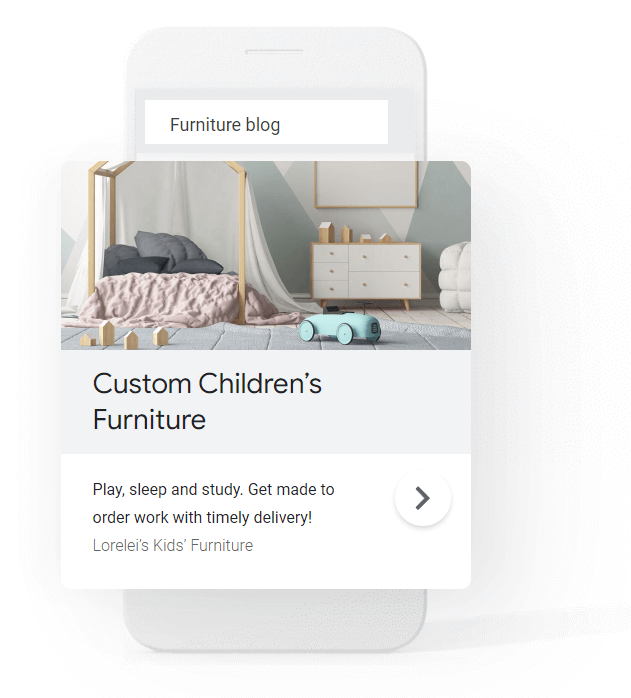
Responsive banner ads should be designed and launched in a way that enables proper display to the appropriate audience. Google handles the rest by adapting the ads to the right size and format. When creating an ad, remember to follow Google’s basic advertising policies and meet the requirements for the specific creative format. The basic elements of every display ad in Google Ads are:
- Image,
- Logo,
- Text.
Additionally, when creating a display campaign, the audience must be considered. This is the most important factor that has a crucial impact on the effectiveness of marketing efforts. When planning the target group, the following elements should be taken into account:
- Keywords – a set of phrases and expressions that should trigger the display of a specific creative,
- Demographic targeting – a model of the audience that may be interested in the advertised offer,
- Target websites – when creating an ad, you can specify domains that are allowed to display a given creative (e.g., only Onet, or not Elle),
- Topic targeting – graphic ads can be limited to sites related to a specific topic. A good practice is, for example, targeting a car repair shop ad on automotive forums,
- Interest targeting – there’s also the option to specify what interests characterize the target audience of the advertised company’s products and services,
- Remarketing – the last element worth planning is a list of people who have already visited the offered website or may potentially be interested in it. Remarketing lists, when created and used in display ads, can significantly increase campaign effectiveness and click-through rates.
Requirements for Responsive Ads
In the previous paragraph, the required elements of every display ad were indicated. Each of these should meet additional requirements to increase effectiveness and properly present the prepared creative. The image is the graphic element of the ad. Only campaigns equipped with images enable all ad formats to run. When creating a campaign, it’s worth adding the following graphics:
- Square – an element with 1:1 proportions and minimum dimensions of 300x300px,
- Rectangle – an element with 1.91:1 proportions and a minimum size of 600x314px.
In each of these elements, text content cannot occupy more than 20% of the image area. As for the company logo, the requirements are slightly different:
- Square – 1:1 proportions, minimum size 128 x 128 (recommended size: 1200 x 1200),
- Landscape rectangle – 4:1 proportions, at least 512 x 128 (recommended landscape logo size: 1200 x 300).
It’s worth adding the company logo to every creative to increase its attractiveness and stand out from other campaigns. Remember that the maximum file size is 5MB. The last element of an advertising campaign is its text. When developing the copy, you need to create a short and long headline as well as ad description text. The short headline can have a maximum of 30 characters, and the other elements 90. For ad descriptions, up to five variations can be added so that Google can match the appropriate one to each incoming user and rotate them to optimize the campaign.

Advantages and Disadvantages of Responsive Display Ads
Every advertising campaign has its pros and cons. The same naturally applies to responsive display ads on the Google Display Network. The key advantages include:
- Variety – display ads come in many shapes and sizes. They can be presented in numerous formats and shapes, meaning you can choose an ad style and format that helps achieve your intended goals,
- Reach – thanks to the Google Display Network (GDN), you have access to millions of websites directly from your Google Ads account,
- Targeting – with GDN’s broad reach, you can also target ads to the right audiences by placing them on the right websites. This includes demographic and geographic targeting, as well as specific interests of target audiences,
- Measurability – clicks, impressions, and conversions can be tracked from Google Ads, as well as from Google Analytics for more precise performance and engagement tracking.
This all sounds great, but what about the drawbacks? Display advertising has certain disadvantages, including:
- Banner blindness – due to the abundance of graphic ads, many users completely ignore them. This results in a lower click-through rate. However, this can be mitigated through remarketing and multimedia ads,
- Ad blockers – the popularity of ad-blocking technology has grown in recent years. Many brands and media have tried to work around this by giving users the option to allow ads or purchase a subscription.
Summary
Display (banner) ads allow reaching a very wide audience and increasing the effectiveness of remarketing efforts. They adapt to every placement in the advertising network. However, this type of ad is not without drawbacks. It serves as an excellent complement to advertising campaigns and allows for effectively increasing brand awareness at a very low cost per click.
If you have any difficulties with implementing and optimizing Google Ads advertising campaigns, feel free to contact us. We’ll help configure your account, conduct an analysis, and implement campaigns appropriately tailored to the specifics of the advertised business.